If you let a property in the UK, you must have a valid EPC certificate for renting before you can legally market it to tenants. This requirement applies to virtually all domestic rental properties in England, Wales, Scotland, and Northern Ireland. Ignoring it carries significant financial penalties.
In 2026, the rules are more important than ever. Minimum standards are under review. Deadlines are approaching. And tenants are increasingly aware of energy efficiency when choosing where to live.
This guide covers everything landlords need to know.
What Is an EPC Certificate for Renting?
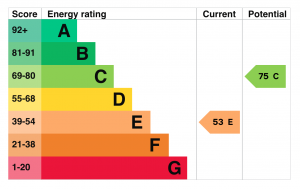
An EPC, or Energy Performance Certificate, rates a property from A to G based on its energy efficiency. A is the most efficient. G is the least. The certificate must be made available to prospective tenants free of charge before they commit to a tenancy.
The EPC also includes a list of recommended improvements and a projected rating if those improvements are carried out. Tenants can use this information when deciding whether the property suits their budget and needs.
Is an EPC Certificate a Legal Requirement for Renting?
Yes. Under the Energy Performance of Buildings Regulations 2012, landlords must have a valid EPC in place before marketing a rental property. The certificate must be provided to prospective tenants at the earliest opportunity and must be included in any online listing.
Failure to provide a valid EPC can result in a fine of up to £5,000 per property. Local authorities are responsible for enforcement and can act on complaints from tenants or inspections.
What Is the Minimum EPC Rating for Renting in England and Wales?
Under the Minimum Energy Efficiency Standards regulations, landlords in England and Wales must ensure their rental properties have a minimum EPC rating of E. Properties rated F or G cannot be legally let without a registered exemption.
Exemptions are available in limited circumstances, such as where the cost of improvement work exceeds a defined cap or where a listed building’s character would be materially affected. Landlords must register exemptions on the official PRS Exemptions Register. Details are available at gov.uk.
In Scotland, the equivalent legislation is the Energy Efficiency (Private Rented Property) (Scotland) Regulations. The requirements differ slightly, but the direction is the same.
What Is Changing for Landlords in 2026 and Beyond?
The government has proposed raising the minimum EPC rating for new tenancies to C by 2030. This means landlords with D or E rated properties need to begin planning improvement work now.
The timeline is tight. Properties that currently sit at E will need significant work to reach C in many cases. Contractors are already reporting growing demand for insulation work and energy efficiency upgrades, and lead times for some measures are increasing. Furthermore, grant funding under schemes like ECO4 may not remain available indefinitely.
For landlords with multiple properties, the financial case for acting early is strong. Spreading the cost of improvements across several tax years is far more manageable than a rushed programme of work close to the deadline.
How to Get an EPC Certificate for Renting
You need to instruct a domestic energy assessor accredited by an approved scheme. The assessor visits the property, carries out an inspection of the building fabric and services, and lodges the certificate on the national register.
Most assessments take between 45 minutes and one hour. Costs in 2026 typically range from £60 to £120 for a standard domestic property, though larger or more complex properties may cost more.
You can verify that an assessor is accredited by checking their details on the relevant accreditation scheme register, which is linked from the gov.uk website.
An EPC is valid for ten years from the date of issue. If a property already has a valid certificate on the national register, you may not need a new one. You can check this at gov.uk using the property’s address or postcode.
However, if you have carried out significant improvement work since the last assessment, it is worth commissioning a new certificate. This ensures the rating reflects the current state of the property and may help attract tenants or justify a higher rent.
What Improvements Help Landlords Meet the Minimum EPC Rating?
Wall insulation is one of the most impactful improvements available. Properties with solid walls benefit significantly from external wall insulation, which improves the rating and reduces running costs for tenants. For more information, visit ecoinsulation.co.uk.
Loft insulation is often the most cost-effective first step. If the loft has less than 270mm of insulation, topping it up can move the rating up by a full band in some cases. The Energy Saving Trust provides guidance on insulation standards at energysavingtrust.org.uk.
Floor insulation is particularly relevant for older properties with suspended timber floors. Heat loss through uninsulated floors is often underestimated. For a full overview of floor insulation options, visit floorinsulation.co.uk.
Boiler replacement and the addition of modern heating controls also contribute to a better rating. A modern condensing boiler paired with a programmable thermostat and thermostatic radiator valves can move a property up one or two bands depending on the baseline.
Double glazing, where single glazing is still present, adds to the rating and reduces tenant complaints about cold draughts and condensation.
What Happens If You Let a Property Without a Valid EPC?
Local authorities can issue a penalty charge notice of up to £5,000 for each property marketed without a valid EPC. The fine applies per property, not per landlord, so portfolio landlords face significant exposure if they are non-compliant across multiple properties.
Beyond the financial risk, tenants can also use the absence of a valid EPC as grounds to challenge the tenancy. It is therefore in every landlord’s interest to treat EPC compliance as a non-negotiable part of property management.
How to Check If Your Property Needs a New EPC
Search the national EPC register at gov.uk using your property’s address. If a valid certificate appears and is less than ten years old, you are covered unless you have carried out significant works since it was issued. If the certificate has expired or no certificate exists, you must arrange a new assessment before marketing the property.
For a full overview of how the EPC rating system works in the UK, see our guide to EPC ratings in the UK.
 Getting your EPC certificate for renting sorted before marketing begins protects you legally and helps attract quality tenants. If you need help arranging an assessment or want advice on the most cost-effective improvements for your property, contact us today.