If you rent out a property in England or Wales, the EPC rating of that property is no longer just a number on a certificate, meeting the minimum EPC rating directly determines whether you can legally let it. The Minimum Energy Efficiency Standards (MEES) have tightened significantly since their introduction, and further changes are coming. This guide sets out exactly where the rules stand in 2026, what landlords need to do, and what happens if a property falls below the required rating.
The Current Minimum EPC Rating for Rented Properties
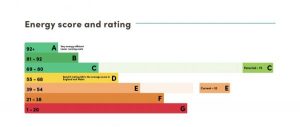
Since April 2023, landlords in England and Wales must not let a residential property, under any tenancy type, if it has an EPC rating below E. This applies to:
- New tenancies granted after 1 April 2020
- All existing tenancies, including those that started before the MEES regulations came into force
In plain terms: if your rental property has an EPC rating of F or G and you currently have tenants in it, you are already in breach of the regulations unless you hold a valid registered exemption.
The rating threshold applies to the EPC lodged on the national register. If your property has an EPC that is less than 10 years old and rates E or above, you currently comply with the minimum standard.
What Changes Are Coming After 2026?
The government has consulted on raising the minimum EPC rating for rented properties to C. The proposed timetable, which has shifted several times, points toward a requirement for new tenancies to achieve an EPC C from 2028, with all tenancies required to meet C by 2030.
As of April 2026, final legislation confirming this timetable has not passed. However, the direction of travel is clear, and landlords who plan ahead now avoid the scramble, and the higher costs, that come with rushing improvements to meet a deadline.
A property rated D or E today may be legally lettable now but require significant investment within the next two to four years. Landlords with portfolios that include D and E rated properties should treat this as an active planning issue rather than a future concern.
Which Properties Need an EPC for Renting?
Almost all residential rental properties in England and Wales require a valid EPC. The requirement applies to the whole building if it is a single dwelling, or to each self-contained unit if the building contains multiple flats.
A small number of property types are exempt from the EPC requirement entirely:
- Listed buildings (where compliance would unacceptably alter the character of the building)
- Holiday lets used for fewer than four months a year
- Residential buildings used less than four months a year
- Standalone buildings under 50 square metres
Properties that fall within these categories do not need an EPC and therefore do not need to meet the MEES rating threshold. However, landlords cannot claim a building is listed or exempt without being able to evidence it, the exemption is a legal position, not just a preference.
What Happens if a Rental Property Fails the Minimum EPC Rating?
Civil Penalties
Local authorities enforce MEES and can impose civil penalties of up to £30,000 per property per breach. The penalty structure in England is:
| Breach | Maximum penalty |
|---|---|
| Letting a property below the minimum rating | Up to £30,000 |
| Providing false or misleading information on an exemption | Up to £5,000 |
| Failing to comply with a compliance notice | Up to £5,000 |
Local authorities can also publish details of non-compliant landlords, which carries reputational consequences alongside the financial ones.
Tenants Can Report Non-Compliance for minimum EPC rating
Tenants have the right to report their landlord to the local authority for MEES non-compliance. A tenant who suspects their property has an F or G rating, which they can check on the public EPC register at epcregister.com, can trigger an investigation without any formal complaint process.
Mortgage and Insurance Implications for failing the minimum EPC rating
Some mortgage lenders require properties to hold a minimum EPC rating as a condition of the mortgage. Non-compliance with MEES can also affect buildings insurance if it comes to light during a claim or renewal. Landlords should check their mortgage terms and insurance policy wording.
How to Improve a Rental Property’s EPC Rating
The most effective route to a C rating depends entirely on what the property currently has and lacks. An EPC assessor’s report includes a list of recommended improvements with their estimated impact on the score. Common measures that move a property from E or D to C include:
Loft Insulation
If the loft has less than 270mm of insulation, topping it up is typically the cheapest and highest-impact measure available. A well-insulated loft can add 5 to 15 points to an EPC score.
Wall Insulation
For cavity wall properties, filling an unfilled cavity adds significant points and costs relatively little. For solid wall properties, external or internal wall insulation is required, more expensive but potentially moving the rating by 15 to 25 points.
Heating System Upgrade
Replacing an old gas boiler with a modern A-rated condensing boiler improves the rating. A heat pump delivers a larger improvement still under the current SAP methodology. Properties with electric storage heaters, common in older flats and converted properties, often rate poorly specifically because of the heating system.
Hot Water Cylinder Insulation
An uninsulated or poorly insulated hot water cylinder loses significant heat. A cylinder jacket costs very little and contributes to the EPC score.
Double Glazing
Single glazed windows drag the rating down. Replacing them with double glazing improves the score and reduces tenant heating costs, which matters for tenant retention.
Solar Panels Are a Great Way to Raise Minimum EPC Rating s
A modest PV system (2 to 4kWp) can add 10 to 20 points to an EPC and push a D-rated property to C. For landlords with properties in reasonable solar exposure, this is increasingly worth considering as panel costs have fallen substantially.
Grant Funding for Landlords
Landlords sometimes assume grant funding for energy efficiency improvements only targets owner-occupiers. That is not the case, private landlords can access funding through several routes.
ECO4
The Energy Company Obligation scheme funds energy efficiency improvements for fuel-poor and low-income households. Private landlords qualify where their tenants meet the eligibility criteria, typically receiving certain means-tested benefits or living in a property with a poor EPC rating. The works install at no cost to the landlord, but the tenant must give consent and the landlord must agree to the work.
ECO4 does not require the landlord to contribute financially, but the landlord must commit to not raising rent as a result of the improvements for a period after installation.
Great British Insulation Scheme (GBIS)
Targets properties in lower council tax bands or with EPC ratings of D or below. Landlords with eligible properties can access subsidised insulation through registered suppliers. The scheme funds one primary measure per property.
Boiler Upgrade Scheme
Provides grants of £7,500 toward the cost of a heat pump. Available to landlords as well as owner-occupiers. A heat pump installation on a property currently heated by electric storage heaters or an old gas boiler can transform the EPC rating.
A PAS 2030-certified, TrustMark-registered installer can assess which funding routes apply to each property in a portfolio and manage the applications.
MEES Exemptions: When They Apply and How to Register Them
Where a landlord genuinely cannot bring a property to the minimum EPC rating, MEES regulations allow for exemptions. These are not a way to avoid the rules indefinitely, they are specific, time-limited provisions for defined circumstances.
High Cost Exemption
Where the cheapest qualifying improvement costs more than £3,500 including VAT, and the landlord has explored all available funding routes, they can register a high cost exemption. The landlord must obtain at least three quotes and demonstrate that no grant funding covers the works.
No Improvements Possible Exemption
Where a qualified assessor confirms that no relevant improvement measures are technically feasible, typically in a listed building or a property where planning restrictions prevent wall or window improvements, the landlord can register this exemption.
Third Party Consent Exemption
Where improvement works require consent from a freeholder, leaseholder, or planning authority, and that consent has been actively sought and refused, the landlord can register this exemption.
All exemptions register on the government’s PRS Exemptions Register at gov.uk. Most last five years. Exemptions do not transfer to a new landlord on sale, the buyer must independently qualify.
Landlords should treat exemptions as a last resort rather than a first response. Many properties that appear to qualify for a high cost exemption actually qualify for funded improvements through ECO4 or GBIS that remove the need for an exemption entirely.
Practical Steps for Landlords in 2026
Check every property’s current EPC rating. Search the EPC register at epcregister.com. If any property rates F or G, it needs immediate attention. If properties rate D or E, plan now for the likely future requirement to reach C.
Commission a new EPC if the existing one is over 10 years old or if significant improvements have been made. An outdated EPC may not reflect the current state of the property, particularly if loft insulation, glazing, or heating has been upgraded since the last assessment.
Get improvement surveys done before the price rises. As the 2028 deadline for new tenancies approaches, demand for assessors, installers, and materials will increase and prices will follow. Landlords who act in 2026 and 2027 secure better pricing and better availability.
Check grant eligibility for each property. A single conversation with a registered installer often reveals funding that a landlord did not know was available. ECO4 in particular funds improvements that landlords assume they would need to pay for themselves.
Document everything. If you register an exemption or fund improvements, keep records of quotes, survey reports, grant applications, and completion certificates. Local authority enforcement officers can request evidence.
Frequently Asked Questions
Does MEES apply to HMOs?
Yes. Houses in multiple occupation require an EPC for the whole building. Each self-contained unit within a larger property also requires its own EPC. Both the building-level and unit-level ratings must meet the minimum standard.
What if my tenants refuse access for improvement works to meet the minimum EPC rating ?
A landlord who cannot carry out improvements because a tenant refuses access can register a temporary exemption while demonstrating they have taken reasonable steps to obtain consent. The landlord should document all attempts to arrange access in writing.
Can I sell a non-compliant property to another landlord?
Yes. MEES compliance obligations attach to the tenancy, not the sale. However, a buyer taking on a non-compliant tenancy inherits the compliance problem, which affects the property’s value and saleability. Most informed buyers discount F and G rated rental properties significantly.
Does a higher EPC rating justify a higher rent?
There is no legal basis for charging higher rent solely because of an EPC rating. However, lower energy costs benefit tenants in more efficient properties, which can help with tenant retention and reduce void periods.
How do I find out what improvements would take my property to a C EPC Rating?
Commission an EPC assessment. The assessor’s report includes a table of recommended improvements, each with its estimated impact on the score and approximate cost range. This gives you a clear roadmap from the current rating to C.
Information correct as of April 2026. MEES regulations and proposed changes to minimum EPC standards are subject to ongoing legislative development, check the latest government guidance or take professional advice for your specific portfolio.
Check your EPC here.