We use cookies to provide you with a better experience. By continuing to use this site, you agree to our use of cookies.

EPC Certificate London: What Landlords Need to Know Before 2026 Deadlines

The EPC certificate London landlords rely on is about to matter more than ever. The government has signalled that minimum energy efficiency standards for rental properties will tighten, and London’s housing stock includes a disproportionately high share of older, energy-inefficient properties. This guide covers what the current rules require, what is changing, and what London landlords should do now to stay compliant and protect their rental income.

The Current Minimum EPC Rating for London Rentals

All privately rented properties in England, including London, must have a valid EPC certificate with a minimum rating of E before a tenancy can begin. This requirement has been in place since 2018 for new tenancies and since 2020 for all existing tenancies.

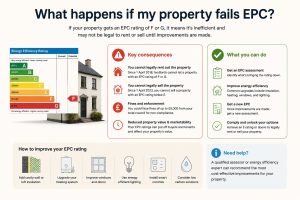
If your London rental property currently has an F or G rating, you cannot legally let it without first improving the rating or registering a valid exemption. The Minimum Energy Efficiency Standards (MEES) regulations enforce this, and local authorities can issue civil penalties of up to £30,000 for non-compliance.

What Is Changing: The Move Toward EPC C

The government has proposed raising the minimum EPC rating for new tenancies to C by 2028 and for all tenancies by 2030. These dates have shifted several times, so landlords should check the current timeline with the government’s official guidance. However, the direction of travel is clear. In practice, most London landlords who own older properties will need to carry out improvement work to comply.

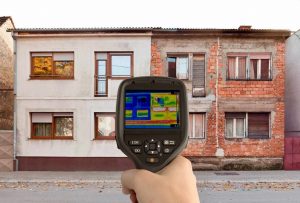
London presents a particular challenge in this regard. A large proportion of London rental properties are Victorian and Edwardian conversions with solid walls, single-glazed windows, and older heating systems. These properties typically sit at EPC D or below without intervention.

How to Improve Your EPC Certificate London Rating

The fastest ways to improve an EPC rating in a London rental property are loft insulation, wall insulation, and boiler replacement. Of these, wall insulation delivers the largest single improvement for solid-walled properties.

For properties with cavity walls, cavity wall insulation is quick, affordable, and often funded through ECO4. For solid-walled properties, internal or external wall insulation is required. Costs range from £4,000 to £15,000 depending on the method, but ECO4 funding may cover part or all of this for eligible tenants.

Our sister site wallinsulation.co.uk covers all wall insulation options and grants in detail, including the routes available to London landlords with solid-walled properties.

The Cost of an EPC Certificate in London

An EPC assessment in London typically costs between £60 and £120 depending on the size and complexity of the property. London assessors tend to charge more than the national average due to higher operating costs and travel time. However, the certificate is valid for ten years, which makes the annual cost minimal.

For landlords with multiple properties, bulk assessment rates are often available. Contact us for a quote covering your full portfolio.

How Quickly Can You Get an EPC Certificate in London?

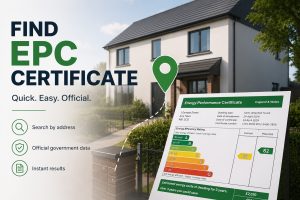
Most London assessors can carry out an assessment within two to five working days of booking. In urgent cases, same-day or next-day assessments are sometimes available. The certificate is lodged on the official government register within 24 hours of the assessment, which means you can provide it to prospective tenants almost immediately.

For the government’s official register where you can verify any existing EPC certificate, see: https://find-energy-certificate.service.gov.uk

EPC Exemptions for London Landlords

If you cannot achieve the minimum EPC rating despite making all cost-effective improvements, you may be able to register an exemption. Valid grounds for exemption include cases where the cost of improvements exceeds the current cap, where a tenant refuses access for improvement works, or where planning restrictions prevent the required works.

Exemptions must be registered on the PRS Exemptions Register. They are valid for five years and do not remove the obligation to improve the property when the exemption expires. For full guidance on exemptions, the government provides detailed information here

Book Your EPC Certificate in London Today

epc certificate londonWhether you need a new EPC certificate for a London property, want to understand your options for improving your rating, or are managing a portfolio across multiple boroughs, contact us today. We arrange qualified London assessors, fast turnaround, and certificates lodged on the official register the same day.

Commercial EPC Certificate vs Domestic EPC: What Is Actually Different?

The commercial EPC certificate cost is higher than a domestic EPC, and for good reason. Commercial and domestic EPCs are fundamentally different assessments. They use different methodologies, require different qualifications, and serve different legal purposes. This guide explains the key differences so you know what to expect before you commission either type.

What Is a Domestic EPC?

A domestic EPC assesses the energy performance of a residential property. The assessor visits the property, records details about the construction, insulation, heating system, and glazing, and uses government-approved software to produce a rating from A to G.

Domestic EPCs are required when you sell or let a residential property in England. The assessment typically takes 30 to 60 minutes for a standard home. The cost ranges from £60 to £120 depending on property size and location.

What Is a Commercial EPC?

A commercial EPC, also known as a non-domestic EPC, assesses the energy performance of a commercial building. This includes offices, shops, warehouses, hotels, schools, and any building that is not used as a dwelling.

The commercial EPC certificate cost is higher because the assessment is considerably more complex. Commercial buildings vary enormously in size, use, and mechanical systems. As a result, the assessment requires a Level 3, 4, or 5 qualified assessor depending on the building type, and the methodology used is entirely different from the domestic approach.

How Commercial EPC Certificate Cost Compares to Domestic

For a small commercial property such as a single office unit or retail shop, the commercial EPC certificate cost typically starts at £150 to £300. For larger or more complex buildings, costs rise significantly. A medium-sized office building might cost £400 to £800. A large industrial unit or mixed-use development can cost £1,000 or more.

By comparison, a domestic EPC for a two-bedroom flat costs £60 to £90 in most parts of England. The commercial EPC certificate cost reflects the additional time, specialist software, and higher qualification level required.

Key Differences Between Commercial and Domestic EPCs

  • Legal requirement: Both types are required when selling or letting a property. However, commercial buildings above 500 square metres that are frequently visited by the public must also display the EPC in a prominent location.
  • Assessor qualification: Domestic assessors hold a Level 3 qualification. Commercial assessors hold Level 3, 4, or 5 depending on building complexity. As a result, commercial assessors are harder to find and command higher fees.
  • Methodology: Domestic EPCs use the Standard Assessment Procedure (SAP) or Reduced Data SAP (RdSAP). Commercial EPCs use the Simplified Building Energy Model (SBEM) or dynamic simulation modelling for complex buildings.
  • Validity: Both domestic and commercial EPCs are valid for ten years.
  • Recommendations: Both types include a recommendations report. However, commercial recommendations tend to focus on building services, lighting, and controls rather than fabric improvements.

When Do You Need a Commercial EPC?

You need a commercial EPC when you sell or let a commercial property in England. Furthermore, you need one when a building is newly constructed or undergoes a material change of use. Public buildings above a certain size must also display a Display Energy Certificate (DEC), which is a separate but related document.

For the government’s full guidance on commercial EPC requirements, see here.

Can the Same Assessor Do Both Types?

No. A domestic assessor is not qualified to produce a commercial EPC. If you need both types for a mixed-use building, you will need separate assessors for the residential and commercial parts. This is common in properties with retail units on the ground floor and flats above.

For domestic EPC assessments across your portfolio, see our guide to finding your EPC certificate.

Our sister site ecoinsulation.co.uk covers external wall insulation options for commercial and mixed-use buildings looking to improve their EPC rating before a sale or lease renewal.

Get a Quote for Your Commercial EPC Today

Commercial EPC certificate cost varies by building type and complexity. Contact us today for a fast, accurate quote from a qualified assessor. We cover all commercial property types across England and lodge certificates on the official register the same day.

Should I Get a New EPC Assessment? (2026)

An EPC is valid for 10 years but a new EPC assessment before then may be a good idea. If yours has not expired, you are not legally required to get a new one, but there are specific situations where commissioning a new assessment makes real financial and practical sense. There are also situations where it is a waste of money. This guide helps you work out which category you are in.


When You Have No Choice: Legal Requirements

Before getting to the question of whether you should get a new assessment, confirm whether you legally need one.


You must have a valid EPC when:


Selling your property. An EPC must be commissioned and available before a property is marketed for sale. If your existing EPC has expired, more than 10 years since it was issued, you need a new one.


Letting a property. Landlords must have a valid EPC before marketing a rental property to tenants. The EPC must show a rating of E or above (or a registered exemption). If your rental EPC has expired or the property has never had one, you need a new assessment.


A newly built or substantially altered property. New builds require an EPC as part of building regulations sign off.


Check the EPC Register at epcregister.com. Enter the property address and you will see whether a valid EPC exists, when it was issued, and when it expires. Any property that has been on the register within the last 10 years does not legally need a new assessment for a sale or letting, as long as the circumstances covered in the register certificate still broadly apply.


When a New Assessment Is Worth Getting Voluntarily

You Have Made Significant Improvements Since the Last Assessment

An EPC captures the property at the time of assessment. If you have installed loft insulation, cavity or solid wall insulation, double glazing, a new boiler, solar panels, or underfloor heating since the last certificate was issued, none of these improvements are reflected in your existing EPC.


This matters for several reasons:


The EPC may understate your property’s performance. A rating of E on an old certificate for a property that now has full loft insulation, a new boiler, and double glazing is inaccurate. The actual rating is probably C or D.


A higher rating can affect your mortgage or sale price. Lenders increasingly factor EPC ratings into mortgage product availability. Some green mortgage products offer preferential rates for A or B rated properties. A more accurate certificate may open better financing options.


For landlords, a higher rating affects compliance status. If an existing certificate shows E or below but improvements since that assessment would now produce a D or C, a new certificate demonstrates compliance with MEES without the need for an exemption.


The question is how confident you are that the improvements would produce a meaningfully better rating. If you have replaced windows, topped up the loft, and installed a new boiler since a D certificate was issued, a new assessment will almost certainly show C. If you have done relatively minor work, the improvement may not cross a band boundary.


A scenario analysis from an experienced EPC assessor, asking them to estimate the likely rating given the improvements made, can help you decide whether a new assessment is worth commissioning before paying for it.

Your EPC Was Issued Before June 2025

The RdSAP 10 methodology update in June 2025 was the most significant change to EPC calculations in over a decade. Properties assessed under the previous methodology (RdSAP 9.94) may score differently under RdSAP 10, higher or lower depending on their characteristics.


Properties likely to score better under RdSAP 10:


  • Solid brick properties with walls thicker than 280mm (revised U value assumption)
  • Mid floor flats and mid terrace properties (revised heat loss assumptions for shared elements)
  • Properties where documentation of improvements is now available that was not available at the previous assessment


Those that may score differently (not necessarily worse):


  • Properties where the previous assessor used generous default assumptions that RdSAP 10 no longer permits
  • Properties where the heating system details could not be verified and the new methodology applies a lower default


If your property falls into one of the categories likely to benefit from RdSAP 10, and you are close to a band boundary, particularly the D to C boundary, a new assessment is worth considering.

You Are Planning Improvements and Want an Accurate Baseline

If you are about to spend money on insulation, glazing, or heating upgrades, you want to start from an accurate picture of where the property currently stands. An old EPC, particularly one from before RdSAP 10, may not give you that.


A current assessment provides:


An accurate current score and band. What is the property actually rated at today, under the current methodology?


An accurate potential score. What could the property achieve if all recommended measures were implemented?


A current recommended improvements table. Which measures does the assessor recommend, in what order, and what is their estimated individual impact?


This information directly shapes which improvements to prioritise and in what order. Spending money on improvements guided by an old certificate is less efficient than spending money guided by a current one.

You Are a Landlord Planning for the 2030 MEES Deadline

Landlords need to achieve EPC band C by 1 October 2030. A new assessment in 2026 or 2027, before the Home Energy Model methodology change expected in late 2027, gives you:


An accurate picture of the current rating. Where does each property in your portfolio actually sit under RdSAP 10?


A clear gap to C. How many points does each property need to reach C, and which measures deliver those points most cost effectively?


The ability to plan and phase improvements. Rather than rushing improvements in 2029 and 2030 when installer availability will be constrained and prices elevated, you can commission work now at your own pace.


The strategic option of locking in a C before HEM. A valid EPC C issued before October 2029 under the current methodology is treated as compliant for up to 10 years. Getting assessments and improvements done now preserves this option.


When a New Assessment Is Not Worth It

Your Existing Certificate Is Recent and Nothing Has Changed

A certificate issued in the last two or three years under RdSAP 10 (post June 2025) accurately reflects the property. If you have not made any significant improvements since then, a new assessment produces essentially the same result at a cost of £60 to £120 for no benefit.

You Are Commissioning Improvements and the Assessor Will Come Back Afterward

If you are about to install significant improvements, solid wall insulation, a heat pump, solar panels, there is no point commissioning an assessment now when the certificate will be outdated within months. Commission the improvements, then get a new assessment once they are complete to capture the improved rating.


The exception is if you need an accurate current baseline to plan what improvements are needed. In that case, a pre improvement assessment is useful planning information even if you will commission another one after the works.

The Improvement to Your Rating Would Be Marginal

If you have made minor improvements since the last assessment, draught proofing, a new programmer, LED lighting, and these are unlikely to move the rating by more than a point or two, a new assessment is not going to produce a meaningfully different certificate. Save the money.


What to Expect From a New EPC Assessment

A domestic EPC assessment typically takes 30 to 60 minutes for a standard property. The assessor visits the property and records:


  • Wall, roof, and floor construction
  • Heating system type, make, model, and controls
  • Hot water provision
  • Window glazing type and condition
  • Presence and depth of insulation in loft and walls


Under RdSAP 10, the assessor uses a hierarchy that prioritises documented evidence over default assumptions. Bring out any documentation you have, boiler installation certificate, insulation completion certificates, FENSA window certificates, before the assessor arrives.


The assessor enters the data into approved SAP software, calculates the rating, and lodges the certificate on the national EPC Register. You receive a copy. The certificate appears on the public register within a few days of lodgement.


How Much Does a New EPC Assessment Cost?

EPC costs in 2026 range from approximately £60 to £120 for a standard domestic property, depending on the property size and the assessor’s location and pricing. Larger properties take longer to survey and cost more.


Shop around, but do not choose purely on price. An assessor who spends 20 minutes in a large property has not assessed it properly. Check that the assessor is accredited on the EPC Register’s accredited assessor search before appointing them.


Frequently Asked Questions

Can I use an existing EPC if I am selling my property? Yes, if it is less than 10 years old and lodged on the national register. You do not need a new assessment unless the existing certificate has expired.


Will a new EPC definitely show a higher rating if I have made improvements? Not definitively, it depends what improvements you have made and how they affect the calculated energy performance. Significant improvements such as full loft insulation, cavity wall insulation, or a new boiler are very likely to improve the rating meaningfully. Minor improvements may make little difference.


Can I choose which assessor to use? Yes. You can commission an EPC assessment from any accredited domestic energy assessor. Find accredited assessors through the EPC Register or through accreditation bodies such as Elmhurst Energy, Stroma, or ECMK.


How long does it take to get an EPC? Most assessors can complete the survey and lodge the certificate within a few days of the visit. In busy periods, appointment availability may extend this. For sale or letting situations with a deadline, book early.


Does the EPC assessor check if my insulation is actually there? The assessor records what is visible and what can be evidenced through documentation. They do not open walls or carry out invasive inspections. Where insulation is not visible and no documentation exists, the assessor may record the wall or floor as uninsulated. Keep all installation certificates to ensure improvements are correctly recorded.

Check my EPC

Book EPC assessmentCosts and methodology information correct as of April 2026. The Home Energy Model is expected in late 2027 and will introduce a new assessment framework, monitor government guidance for updates.


How long does an EPC last? Validity & expiration

If you’re wondering how long does an EPC last? The answer is simple: an Energy Performance Certificate (EPC) is valid for 10 years from the date of issue. But while that sounds straightforward, there are important rules about when you need a new one, especially if you’re selling, renting, or making changes to your property. 

In this guide, we’ll explain EPC validity, renewal requirements, penalties for non-compliance, and how to keep your certificate up to date.

How long does an EPC last?

An EPC lasts for 10 years in England, Wales, and Northern Ireland. During this time, you can use the same certificate multiple times when selling or renting your property. After 10 years, it automatically expires, and you’ll need to get a new one before marketing your home again.

When do you need to renew an EPC?

You need to renew your EPC when the 10-year validity period ends and you plan to sell or rent out the property. If you’re staying in your home and not putting it on the market, you don’t legally need to renew immediately, although keeping an up-to-date certificate can be useful for tracking your property’s energy efficiency.

Is an EPC still valid if you make home improvements?

Your EPC is still valid if you make home improvements, but it may no longer reflect the property’s true energy performance. For example, if you add wall insulation, replace your boiler, or install double glazing, your energy rating could improve significantly. In these cases, many homeowners choose to order a new certificate early to showcase upgrades to potential buyers or tenants.

Do you need a new EPC to sell or rent a property?

Yes, you must have a valid EPC to sell or rent a property. By law, estate agents, landlords, and property sellers must provide one to potential buyers or tenants. If your current certificate has expired, you’ll need a new one before advertising your property on the market.

How to check if your EPC is still valid

It’s easy to check if your EPC is still valid by visiting the EPC Register on the gov.uk website. All EPCs issued in the last 15 years are stored here, so you can search by property address or certificate number. The register will show you the issue date, expiry date, and current rating. 

We also have one of the largest databases for EPC certificates in the UK, available for your perusal here. Simply enter an address from England, Wales, or Northern Ireland to find useful information about a property’s condition, and advice on how to improve its rating. 

Who can provide a new EPC and how much does it cost?

Only an accredited Domestic Energy Assessor (DEA) can issue a valid EPC. Costs usually range from £40 to £120, depending on the property’s size, type, and location. For larger commercial properties, the cost is higher and requires a Commercial EPC (CEPC). You can arrange one through estate agents, specialist providers, or directly via certified assessors. 

We can help you find a certified assessor in your area here.

Penalties for not having a valid EPC

Failing to provide a valid EPC when selling or renting a property can result in a fixed penalty fine, typically £200 per dwelling in the UK. For landlords, repeated failure to comply with the relevant regulations can also impact your ability to legally rent out properties. For businesses and public buildings, penalties can be much higher, depending on the scale and type of property.

Tips for keeping your EPC up to date

The best way to keep your EPC up to date is to:

  • Track the expiry date using the EPC Register.
  • Renew early if you plan to sell or rent soon.
  • Reassess after major upgrades like insulation, heating, or solar panels.
  • Use recommendations as a checklist for improvements.

By acting before expiry, you avoid last-minute delays when marketing your home.

Staying compliant with EPC rules

Staying compliant with EPC rules is essential if you want to sell, rent, or advertise a property in the UK. Remember that the certificate lasts for 10 years, but your property’s efficiency can change much sooner if you make upgrades. A higher rating not only helps with energy saving and lower energy costs but also makes your property more attractive to potential buyers and tenants.

Ready to improve your rating and lower your bills? Start with insulation, the fastest way to boost energy efficiency. Visit Eco Insulation to book a free survey and see how you can move your property up the EPC scale.