This article will walk you through how to improve EPC rating as doing so in 2026 means working within a methodology that is about to change significantly. The Home Energy Model (HEM), the government’s replacement for the current SAP and RdSAP framework, is expected in the second half of 2027. When it arrives, it will assess properties against four new headline metrics rather than a single energy cost band. What that means for your rating, and what you should prioritise now to get ahead of it, depends entirely on what your property currently has and lacks.
Why 2026 and 2027 Are the Critical Window
The government has confirmed that landlords must achieve an EPC band C by 1 October 2030. EPCs issued under the current methodology (RdSAP 10, introduced June 2025) will remain valid for 10 years. A property that achieves a valid EPC C before October 2029 under the current methodology will be treated as compliant until that certificate expires, potentially until 2039.
This creates a clear strategic case for achieving band C before HEM takes effect. A property owner who secures a C rating under the current, more straightforward methodology avoids the more demanding dual metric requirements that HEM introduces. The EPC Checker published analysis suggesting that some properties currently sitting at C could fall to D under HEM without any physical changes, because the new methodology assesses fabric performance and heating system performance separately, and a gas boiler property that passes the current overall cost test may fail the heating system metric under HEM.
Acting in 2026 and 2027 means working within the known current methodology, with a clear understanding of what it takes to reach C and a straight line between the current rating and the target.
Understanding the Four HEM Metrics
HEM will assess properties against:
Fabric performance, how well the building retains heat through insulation, draught proofing, and windows. This maps most directly to the improvements covered in this guide.
Heating system, the efficiency and carbon intensity of the heating system. Under HEM, gas boiler properties are expected to score worse on this metric than under the current methodology.
Smart readiness, whether the property can generate its own energy (solar PV) or manage energy demand intelligently.
Energy costs, the estimated running cost, similar in concept to the current EPC score.
Properties will need to demonstrate compliance on fabric performance first, then on either heating system or smart readiness. This means that for many properties, achieving HEM compliance will require both fabric improvements and either a heat pump or solar panels, a more expensive and complex programme than the current single band requirement.
The Improvements That Work Under Both Methodologies
Some improvements count strongly under both the current RdSAP 10 methodology and the anticipated HEM framework. These are the ones to prioritise now.
Loft Insulation
Topping up to 270mm delivers significant fabric performance improvement under both methodologies. It is the cheapest high impact measure available and should be the starting point for any unimproved property. Under HEM’s fabric performance metric, loft insulation contributes directly to the assessment.
Wall Insulation
Cavity wall insulation for eligible properties, and external or internal wall insulation for solid wall properties, improves both current EPC scores and HEM fabric performance. For solid wall properties aiming for band C before 2029, wall insulation is almost always the central measure.
Floor Insulation
Contributes to fabric performance under both methodologies. Not as high impact as loft and wall insulation in most properties, but as part of a comprehensive fabric package it contributes meaningful points and helps future proof the property against HEM fabric performance requirements.
Double and Triple Glazing
Window upgrades count under both methodologies. The marginal gain from upgrading already fitted double glazing to triple glazing is modest. Moving from single to double glazing produces a more meaningful improvement.
The Improvements Where Timing Matters
Gas Boiler Replacement
Under the current methodology, replacing an old G rated boiler with a modern A rated condensing boiler adds 3 to 8 EPC points. Under HEM, a gas boiler, however efficient, is expected to perform poorly on the heating system metric. Replacing a gas boiler with another gas boiler in 2026 may achieve current EPC C but not satisfy HEM’s heating system requirement.
The decision point: if the current EPC is close to C and a boiler upgrade would push it over the line, it may make strategic sense to get that EPC C certificate now before HEM takes effect, rather than waiting for a heat pump that might not be in the budget. A valid EPC C from before October 2029 locks in current methodology compliance for up to 10 years.
If HEM compliance by 2030 is the target, particularly for landlords with longer horizons, the case for moving directly to a heat pump rather than replacing a gas boiler is stronger.
Heat Pump Installation
A heat pump installation improves the current EPC score substantially and is expected to satisfy HEM’s heating system metric. The Boiler Upgrade Scheme provides a grant of £7,500 toward heat pump installation costs, available to landlords and owner occupiers.
Heat pumps perform best in well insulated properties. Installing a heat pump before improving the fabric means the heat pump runs at higher flow temperatures to compensate for higher heat loss, which undermines its efficiency. The fabric first approach, insulation before the heat pump, produces a better performing and more cost effective outcome.
Solar PV
Solar panels improve the current EPC score by 10 to 20 points and satisfy HEM’s smart readiness metric. For properties that are strong on fabric but have a gas heating system that performs poorly under HEM, solar PV may be the most practical route to HEM compliance without a full heating system replacement.
The cost of solar PV has fallen significantly in recent years. A 3 to 4kWp system typically costs £5,000 to £8,000 installed in 2026.
A Practical Improvement Roadmap
For a property currently rated D or E aiming for C before October 2029:
Step 1: Commission a current EPC under RdSAP 10. If your existing EPC is from before June 2025, it was produced under the previous methodology. A new assessment gives you an accurate baseline and a recommended improvements table that reflects current calculations.
Step 2: Address loft insulation. If the loft has less than 270mm, top it up. This is the quickest and cheapest high impact improvement available.
Step 3: Address wall insulation. If the property has an unfilled cavity, fill it. If it has solid walls, commission a survey for EWI or IWI. Check eligibility for ECO4 and GBIS funding before paying privately.
Step 4: Check the gap to C. After loft and wall insulation, get a new EPC or ask the installer to produce an in principle EPC improvement estimate. How many more points do you need?
Step 5: Address the remaining gap. Floor insulation, glazing, heating controls, solar PV, or heating system upgrade depending on what the property needs and what the budget allows.
Step 6: Confirm EPC C is achieved before October 2029. Commission a new EPC assessment once improvements are complete. A valid EPC C before this date locks in compliance under the current methodology for up to 10 years.
The Cost Cap for Landlords
Landlords subject to the 2030 MEES deadline have a spending cap of £10,000 per property toward achieving band C. Expenditure from 1 October 2025 counts toward this cap. Where the cost of reaching C exceeds £10,000 and no grant funding is available to cover the balance, a cost cap exemption can be registered.
This means landlords who invest £10,000 in improvements, even if the property cannot reach C within that budget, can register a compliant exemption rather than facing a penalty. The practical strategy is therefore to spend the £10,000 on the measures most likely to improve the rating as far as possible, even if C is not achievable.
Frequently Asked Questions
Will my current EPC C still be valid after HEM takes effect? Yes. EPCs are valid for 10 years from issue regardless of methodology changes. A valid EPC C issued before October 2029 under the current methodology will be treated as compliant for up to 10 years.
Could I currently be rated C but fail under HEM? Possibly. Properties with gas boiler heating may perform well on the current overall energy cost metric but poorly on HEM’s separate heating system metric. The government has said that a valid EPC C before October 2029 locks in current methodology compliance, but this is a strong argument for achieving C now rather than waiting.
Is there a definitive HEM specification available yet? Not in full. The government published its partial response to the EPC consultation in 2025 confirming the four metric structure and the 2027 timeline. Full technical specifications for assessors and software developers are expected as HEM development progresses.
What happens if my property genuinely cannot reach C under either methodology? Register an exemption. The exemption framework under MEES allows landlords to register compliance where the property genuinely cannot reach the required standard within the cost cap. Exemptions last 5 to 10 years and must be supported by evidence.
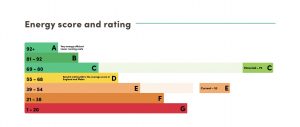
EPC rating: A–G
Information correct as of April 2026. HEM implementation timeline and methodology details are subject to government confirmation, monitor DESNZ guidance for updates.