An EPC certificate Liverpool homeowners and landlords need is both a legal requirement and an increasingly important factor in how a property performs on the open market. In 2026, buyers and tenants in Liverpool are more energy conscious than at any previous point, and the EPC certificate is one of the first things they look at. This guide covers what Liverpool and Merseyside homeowners need to know about EPC certificates, from what the assessment involves to what you can do to improve your rating.
What Is an EPC Certificate and Why Do You Need One?
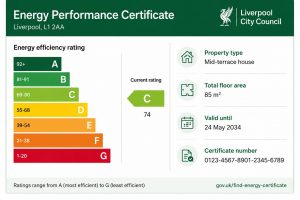
An EPC certificate rates a property’s energy efficiency on a scale from A to G. A is the best and G is the worst. The certificate also sets out the potential rating the property could achieve if you carried out the improvements listed in the report.
In England, an EPC is required before a property can be marketed for sale or let. It remains valid for ten years from the date of issue and is publicly available on the national EPC register. Anyone can look up any property’s certificate using the free EPC search tool here.
Why EPC Certificates Matter in Liverpool
Liverpool has a large concentration of pre-1920 housing, particularly in the inner city neighbourhoods of Toxteth, Kirkdale, Wavertree, Kensington, and Anfield. These properties were built with solid brick walls, minimal insulation, and heating systems that have in many cases been updated but not always to a high efficiency standard. As a result, a significant number of Liverpool properties carry D or E ratings on the EPC register.
Therefore, for Liverpool homeowners planning to sell or let, understanding your EPC certificate and what it shows is increasingly important. A C rated property in Liverpool stands out in a market where D and E ratings are common, and buyers in 2026 are making buying decisions with energy costs firmly in mind.
Furthermore, Liverpool’s large private rental sector means that EPC compliance is a significant issue for many landlords in the city. Properties rated F or G cannot legally be let in England without a registered exemption, and the regulatory minimum is expected to rise in the coming years.
What Does an EPC Assessor Check in a Liverpool Property?
An accredited EPC assessor visits the property and records details about its construction type, wall insulation, loft insulation, floor insulation, heating system, hot water system, windows, and fixed lighting. The visit typically takes between 45 minutes and 90 minutes.
For Liverpool’s Victorian and Edwardian terraces, assessors most commonly flag solid brick walls with no insulation as the primary driver of a low rating. Old gas boilers are also a frequent finding, as are single glazed or poorly fitted windows and loft insulation below current recommended depths.
However, each of these can be addressed. The EPC report provides a prioritised list of improvements and estimates both the cost and the impact on the rating for each one, giving Liverpool homeowners a clear and actionable plan.
How to Improve Your EPC Rating in Liverpool
The highest impact improvements for most Liverpool properties are wall insulation, a modern condensing boiler, loft insulation, and upgraded glazing. For Liverpool’s solid wall Victorian terraces, external wall insulation typically produces the most significant rating improvement because it addresses the entire external envelope in one measure.
Floor insulation is also a recommended improvement for many older Liverpool properties with suspended timber ground floors. For a full guide to floor insulation options across different property types, our sister site covers the topic in detail: floor insulation.
In addition, Liverpool homeowners may be eligible for grant funding through the ECO4 scheme or the Great British Insulation Scheme in 2026. Liverpool’s household income profile and housing stock mean that many properties in the city qualify. The improvements recommended in your EPC report are directly relevant to the grant assessment process.
For a broader guide to EPC certificates and how to use yours effectively for selling or letting, our full resource covers all the key issues regarding your EPC certificate for selling a house.
How Much Does an EPC Assessment Cost in Liverpool?
An EPC assessment in Liverpool typically costs between 45 and 90 pounds for a standard residential property. Prices vary between accredited assessors and depend on the size and type of property. It is worth comparing quotes from at least two or three assessors before booking.
Assessors must hold valid accreditation and be listed on the national register. You can search for accredited assessors in Liverpool through the GOV.UK tool. Only use an accredited assessor, as certificates produced by unaccredited individuals have no legal standing.
How Long Is an EPC Certificate Valid in Liverpool?
An EPC is valid for ten years. If you carry out significant improvements to your Liverpool property during the certificate’s life, it is worth commissioning a new assessment. An up to date certificate reflecting recent improvements will show a higher rating and is far more useful than an outdated one when selling, letting, or applying for grant funding.
 Ready to Get Your Liverpool EPC Certificate?
Whether you need a new EPC for a sale, a let, or simply want to understand your property’s current energy performance and how to improve it, the process is quick and straightforward.
Contact us today to find out how to book an accredited EPC assessor for your Liverpool or Merseyside property.